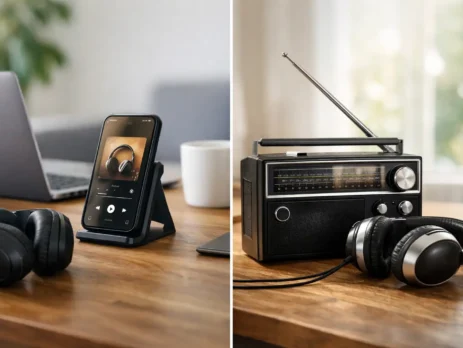
Internet Radio vs FM: Which Fits Your Day?
A favourite song can change the feel of a morning commute, lift a quiet office or keep a Saturday kitchen singalong going. But when choosing internet radio vs FM, the best option is not always about which is newer. It is about where you are, what you are listening on and how much music you want between the chat, adverts and signal changes.
For listeners who want familiar tunes on tap, both formats still have a place. FM radio remains brilliantly simple, especially in the car. Internet radio brings far more choice and makes it easy to hear a consistent stream of music wherever there is a decent connection. Here is how they compare in real life.
Internet radio vs FM: the big difference
FM is traditional broadcast radio. A local or national station sends its signal through transmitters, and your radio receives it through an aerial. You tune in to a frequency, such as 99.0 FM, and listen as long as you are within range.
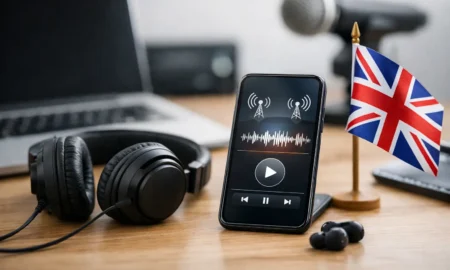
Internet radio works through a broadband or mobile data connection. Rather than receiving a signal from a nearby transmitter, your mobile phone, smart speaker, computer, car system or internet radio connects to an online stream. This means a station can be heard well beyond its original region, whether you are at home in the UK, at work or away on holiday.
The distinction sounds technical, but the listening experience is simple. FM is built for quick, dependable local access. Internet radio is built for convenience, variety and listening across devices.
Choice: familiar favourites or a wider musical world?
FM offers a limited number of stations in any one area. That can be a real advantage when you want to press a button and get on with your day. Local stations may bring local news, travel updates and voices that feel part of the community, while national services offer established formats and well-known shows.
Internet radio has a much bigger dial. You can choose stations devoted to decades, genres, moods and communities from almost anywhere. Fancy 80s pop during the school run, 90s anthems at your desk and current hits while cooking tea? Online listening makes that switch easy.
More choice is not automatically better, though. Scrolling through hundreds of stations can be less appealing when you simply want songs everyone knows. That is why a focused music station can be such a joy: no overthinking, just a dependable mix that gets the mood right. Halo FM is designed around that idea, bringing non-stop hits from the 70s to today with more music and less chatter.
Sound quality depends on your set-up
A strong FM signal can sound warm, immediate and wonderfully familiar. On a good stereo, it still has plenty of appeal. The downside is that FM is vulnerable to interference. Buildings, hills, tunnels and distance from a transmitter can introduce hiss, crackle or fading – particularly when travelling.
Internet radio is usually clearer when your connection is stable. Digital streams can deliver consistent stereo sound without the traditional FM fizz, and some stations offer higher-quality streams than others. For background listening in the kitchen, shop or office, the difference can be noticeable.
There is a trade-off. If your home Wi-Fi is struggling, or your mobile signal drops out on the road, internet radio may pause or buffer. FM does not need broadband, passwords or data allowance. It can keep playing when the internet is down, which is one reason a basic radio remains useful in many homes.
Your speaker matters as much as the format. A small mobile phone speaker will not show off the benefits of either FM or a high-quality stream. A decent smart speaker, car audio system or pair of headphones will make the basslines, choruses and big singalong moments feel far more alive.
Coverage: local signal versus listen-anywhere freedom
FM coverage is geographical. Major stations reach large areas, but reception changes as you move around. A station that sounds perfect at home may weaken on a country road or disappear once you travel outside its broadcast area.
Internet radio is not tied to a transmitter map. If you have Wi-Fi or mobile data, you can usually listen to the same station from your living room, your workplace, a hotel or the garden. That consistency is especially handy for people who have found a station they genuinely enjoy and do not want to hunt for another frequency.
For drivers, the answer is more mixed. Many newer cars support internet radio through built-in apps or mobile phone connections. It can make long journeys feel like taking your favourite station with you. Yet coverage gaps still happen, and streaming on mobile data can be less reliable in rural areas, underground car parks and some stretches of motorway. FM is often the sensible back-up for those moments.
Cost and data: what are you really paying for?
Listening to FM is free once you own a radio. It does not use mobile data, and it does not require a subscription. That makes it an easy choice for a portable radio, an older car or anyone keeping an eye on monthly usage.
Internet radio is also often free to listen to, but the connection is not always free. At home, it uses your broadband. On the move, it uses mobile data unless you are connected to Wi-Fi. Regular streaming can add up, particularly on a smaller data plan or when listening for hours every day.
The good news is that most modern mobile plans include generous allowances, and many people listen over Wi-Fi at home or work. If you stream in the car, check your plan and consider downloading maps and other data-heavy content over Wi-Fi first. It leaves more room for the songs that make the journey better.
Which is better for work, home and travel?
At work, internet radio often wins. A single stream through a computer or smart speaker can provide a steady soundtrack without fiddling with aerials or changing stations as reception shifts. A music-led format is particularly useful in shared spaces, where long talk segments may distract but recognisable songs keep the energy moving.
At home, it depends on your routine. Internet radio is ideal for smart speakers, tablets and connected TVs, with the freedom to choose a station that suits breakfast, cleaning, relaxing or entertaining friends. FM remains excellent for a bedside radio, kitchen set or emergency listening when the broadband is playing up.
When travelling, use both if you can. FM is quick, data-free and reliable enough across much of the country. Internet radio gives you greater choice and continuity when your mobile connection is good. There is no prize for picking one format forever – the clever option is having a favourite available in more than one way.
The hidden benefit of internet radio: fewer barriers to listening
The strongest case for internet radio is not just the number of stations. It is how naturally it fits into daily life. Open a browser, ask a smart speaker, use an app or press play on a connected device. There is no download required to get started, no need to remember frequencies and no need to settle for whatever happens to reach your aerial.
It also gives specialist and independent stations a chance to find listeners beyond their postcode. That is good news for music fans. A station can build its sound around a clear promise, whether that is chilled soul, indie discoveries, dance classics or an upbeat blend of songs across the decades.
Of course, there is still value in the shared routine of FM. The breakfast show you grew up with, the local traffic report before a big match or the familiar voice on a rainy drive can feel like company. Internet radio does not replace that feeling for everyone. It simply gives listeners another route to the music they love.
Make the choice that keeps the music playing
If you want instant, no-data listening in the car or during a broadband outage, FM is hard to beat. If you want a wider choice, clearer audio on a stable connection and the freedom to hear your favourite station in more places, internet radio is likely to suit your day better.
Keep both within reach, turn up the volume when the right track lands, and let the music do what it does best: make the ordinary moments feel a little brighter.