Why Choose a Music Radio Station Without Presenters
You notice it most when you are in the flow. You are driving home, powering through emails, cooking tea or tidying the house, and just as the mood settles in, somebody starts talking over the intro. That is exactly why a music radio station without presenters has such strong appeal. It keeps the energy moving, the songs familiar and the listening experience simple.
For plenty of people, radio is not about waiting for a personality to warm up the room. It is about pressing play and getting a reliable run of great tracks that fit the day. When the format is built around more music and less chatter, it feels less like an interruption and more like the perfect soundtrack carrying you from one part of life to the next.
What a music radio station without presenters does differently
A presenter-free music station strips radio back to its most enjoyable core. The focus stays on the songs, the pace and the mood. Instead of long links, repeated opinions or stop-start momentum, you get a cleaner stream that lets each track do the work.
That does not mean the station lacks personality. Far from it. Personality can come through the music choice, the station imaging, the tone of the brand and the consistency of the playlist. A well-run station still feels lively and welcoming, but it does not ask you to pause your day to listen to somebody else talking.
For listeners, that difference matters more than ever. A lot of us already spend enough time on calls, in meetings, scrolling feeds and hearing constant noise from every direction. When you switch on the radio, there is a real pleasure in hearing song after song without the extra layer.
Why this format fits everyday life so well
The biggest strength of a music-led station is that it works almost anywhere. In the car, it keeps journeys upbeat without turning them into a talk programme. In the office, it gives the room a lift without distracting everyone every few minutes. At home, it can sit in the background while you get on with things, then suddenly pull you in with a favourite chorus from years ago.
That balance is harder to get right than it sounds. Too much talk and the station becomes demanding. Too little energy and it fades into wallpaper. The best music stations without presenters keep enough pace, familiarity and brightness to feel alive, while still letting listeners stay in charge of their own attention.
This is especially true for people who love a broad mix of hits from the 70s to today. You might want a bit of disco in the morning, an 80s singalong at lunch, a 90s throwback in the afternoon and something current later on. A strong music-first station can move across decades without making it feel jarring, because the common thread is feel-good listening.
More music, less chatter is not just a slogan
There is a reason that promise lands so well with listeners. Radio habits have changed. People want convenience. They want a station they can start instantly, on the phone, laptop, smart speaker or in the car, without having to think too much about it. They also want value from their time.
If you are listening for two hours and a large chunk of that is taken up by presenter links, quizzes, banter or repeated trails, it can feel like the music is almost secondary. For some audiences, that is part of the fun. For others, it is exactly what pushes them away.
A music radio station without presenters respects a different kind of listening habit. It suits people who enjoy radio as a companion rather than a performance. The station is there when you need it, lifting the mood, keeping the day moving and delivering songs you know without asking for too much back.
That is one reason online music brands such as Halo FM have found a clear lane. A non-stop stream of recognisable hits offers something many listeners actively want – easy access, familiar tunes and a brighter atmosphere with fewer interruptions.
The trade-off: what you gain and what you miss
There is no perfect format for every listener, and this one has its own trade-offs. If you love presenter chemistry, live anecdotes, interviews or the sense of a host guiding the show, a presenter-free station may feel a little more streamlined than you want. Some people enjoy the companionship of hearing a voice react to the day, share local context or build anticipation around a song.
But for others, that is not a loss at all. It is the whole point. They are not looking for radio as conversation. They are looking for radio as atmosphere, momentum and memory. In that case, the absence of presenters becomes a feature rather than a compromise.
It also depends on the setting. On a Sunday afternoon with time to spare, you might welcome a personality-led programme. During a busy workday or school run, a cleaner music format often wins. That flexibility is why many listeners move between styles depending on the moment.
Why familiarity matters more than novelty for many listeners
A lot of music discovery now happens elsewhere. Streaming platforms, social clips and playlists are full of new releases, niche genres and recommendation engines. Radio still has a different strength. It can deliver trusted, familiar songs in the right order, with no effort required from the listener.
That is a major part of the appeal of a music radio station without presenters. It is not trying to turn every session into an algorithm experiment. It is there to play songs people already have a connection with, whether that is a dancefloor favourite from the 80s, a 90s anthem, a 2000s singalong or a current chart track that fits the same upbeat spirit.
There is comfort in that familiarity, but there is also energy. A well-balanced playlist does more than provide background noise. It can change the mood of a room, make traffic feel less tedious and turn an ordinary Tuesday into something a bit more enjoyable.
Why advertisers often like this format too
For businesses, a music-led station can be an attractive environment. Listeners who stay tuned for longer because they enjoy the uninterrupted flow are often easier to reach consistently. The overall atmosphere is positive, broad and accessible, which suits many local and regional brands.
There is also a practical point here. If the station is built around feel-good songs and steady listening habits, adverts can sit within a familiar routine rather than competing with heavy presenter content. The key, as ever, is balance. Too many breaks and the station loses what makes it appealing. Keep the flow right and both listeners and advertisers benefit.
The digital advantage of presenter-free radio
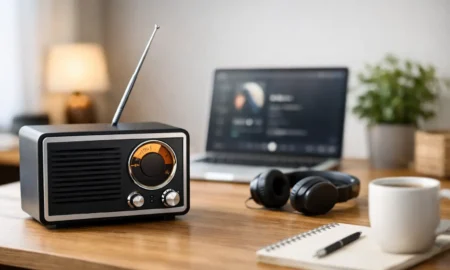
Online listening has made this format even more appealing. People expect instant access now. They want to tap play and hear music straight away, not navigate a complicated app or wait through unnecessary steps. A station with a clear music-first promise meets that expectation neatly.
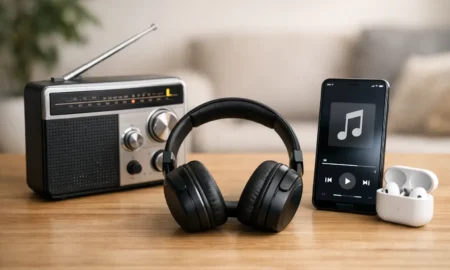
It also travels well. You can start listening in the kitchen, carry on through headphones while working, pick it up again in the car and return to it later. The station becomes a dependable thread through the day. Because the format is simple, the habit becomes simple too.
That matters for listeners across the UK who want a station that feels easy and upbeat rather than demanding. It also suits mixed-age households and workplaces, where a broad playlist and light-touch format tend to please more people.
Is a music radio station without presenters right for you?
If your ideal station gives you song after song, keeps the atmosphere bright and does not break the mood every few minutes, the answer is probably yes. If you want radio to slot smoothly into your life rather than take centre stage, this format makes a lot of sense.
It is especially well suited to commuters, office workers, shop owners, at-home listeners and anyone who wants a dependable stream of familiar hits. You still get the lift that great radio can bring, just without the extra noise. For many people, that feels modern in the best possible way – quicker, easier and more in tune with how they actually listen.
The smart thing is not to think of presenter-free radio as less than traditional radio. It is simply built for a different kind of moment. And if your day runs better with more music, fewer interruptions and plenty of songs you already love, that moment might be most of the day.