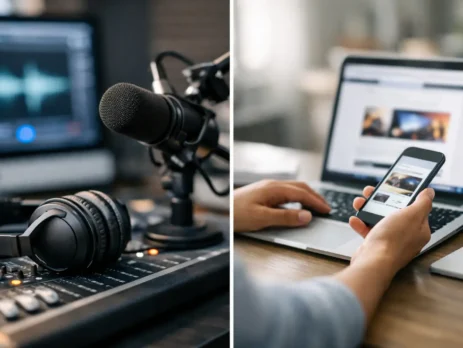
Audio Advertising Versus Display Advertising
A commuter hears your name while singing along to a favourite chorus. Later, the same person spots your offer while scrolling a news site at lunch. That is the real choice behind audio advertising versus display advertising: not which format is universally better, but which moment gives your message the best chance of landing.
For local and regional businesses, both channels can earn a place in the media plan. Audio can put a friendly, memorable voice into everyday routines. Display can put a clear image, price or call to action directly in front of a potential customer. The strongest campaigns understand what each does well, then give each format a job it can genuinely do.
What audio advertising brings to the party
Audio advertising reaches people when their eyes are busy but their ears are open. Think of the drive to work, a shift in the office, cooking tea, walking the dog or getting jobs done around the house. A well-placed audio advert can become part of that soundtrack rather than another screen-based interruption.
This matters because sound carries character quickly. A warm voice, a familiar regional accent, a short musical sting or a well-timed pause can make a business feel human. For a restaurant, garage, salon, event venue or tradesperson, that familiarity can be powerful. Listeners may not need the service at the exact second they hear the advert, but they are more likely to remember who to call when they do.
Music-led stations are particularly useful for brands that want to sit alongside a positive mood. On a station such as Halo FM, non-stop hits from across the decades create an upbeat environment with less presenter chatter competing for attention. The advert has space to make its point, then the listener gets straight back to the songs they know and love.
Audio is also effective at building reach and frequency. Hearing a simple message several times over a week can establish recognition without requiring the listener to click, search or stop what they are doing. That makes it a strong option for awareness campaigns, new openings, seasonal promotions and businesses that need to stay front of mind in a specific area.
Audio’s limitation: it is not built for instant detail
The same qualities that make audio easy to consume create a trade-off. A listener cannot scan a paragraph, compare product specifications or save a complicated discount code while concentrating on the road. Audio works best when the message is focused: who you are, what you offer, why it matters and one easy next step.
A phone number with too many digits, three service categories and a long web address can disappear as quickly as the last chorus. Keep the wording natural, repeat the brand name, and give people a simple route to act, such as searching the business name or visiting a memorable website.
What display advertising does best
Display advertising includes visual adverts served across websites, apps and digital platforms. It might be a banner beside an article, an image in an app or a visual unit that follows a user through selected online spaces. Its big advantage is that it can show rather than tell.
If you sell furniture, food, fashion, holidays or home improvements, imagery can do a lot of the heavy lifting. A mouth-watering dish, a freshly fitted kitchen or a before-and-after photograph gives people information at a glance. Display also makes room for prices, dates, product ranges, promotional codes and buttons that take a user directly to a landing page.
For performance-led campaigns, display can offer useful control. Advertisers can tailor delivery around geography, interests, content categories or previous site visitors, subject to platform settings and privacy rules. Someone who has looked at a particular product can see a reminder advert later. Someone close to a shop can receive a locally relevant message. That ability to refine an audience is valuable when budgets are tight.
Display’s limitation: attention is hard won
A display advert is competing with headlines, social feeds, messages, videos and the main reason someone opened the page in the first place. Many people scroll quickly, use ad blockers or simply develop banner blindness. Being technically viewable is not the same as being noticed.
Creative quality matters hugely. Tiny text, stock images with no clear relevance and vague claims rarely earn attention. A display advert needs one visual idea, a readable benefit and a call to action that matches the landing page. If the advert promises a £20 offer, the page should not make visitors hunt for it.
Audio advertising versus display advertising: the key differences
The simplest distinction is this: audio creates a moment, while display creates a visual prompt. Audio is often better at emotion, memory and companionship. Display is often better at product detail, immediate action and measurable website traffic.
Neither channel should be judged by clicks alone. Audio may prompt branded searches, direct visits, shop visits or word-of-mouth conversations that are not captured by a standard click report. Display may generate impressions and clicks, yet still fail to improve recognition if the creative is forgettable. The right measurement depends on the campaign objective.
For a business launching in a town or building trust over time, audio can be the dependable drumbeat. For an e-commerce sale with a clear deadline, display can put the offer and the purchase path in the same place. For an established business trying to do both, the formats work well together.
When a combined campaign makes more sense
Picture a local theatre promoting a run of shows. Audio can bring the atmosphere: a lively voice, a short clip of applause and the dates listeners need to remember. Display can then show the poster artwork, performance times and a direct booking button. One format plants the idea; the other makes acting on it easy.
The same approach works for a car dealership, fitness studio or independent retailer. Start with audio to create familiarity among a broad audience, then use display to support a specific offer or retarget people who have already visited the website. The message should feel connected, not copied word for word. Use the same campaign name, core benefit and visual or sonic cues so people recognise it straight away.
There is a budget consideration too. Splitting a small budget across too many channels can dilute impact. If you can only afford one format, choose the one closest to your immediate aim. If awareness is the missing piece, audio may earn priority. If you have a strong offer, a polished landing page and a need to drive online action now, display may be the better first move.
Building creative that people remember
Great audio adverts sound like they belong in real life. Use a confident voice, plain language and a pace that leaves room for the listener to take in the message. Mention the brand early and again near the end. If a musical bed is used, make sure it supports the words rather than turning them into background noise.
Great display adverts are equally disciplined. Choose one headline that answers “why should I care?”, one strong image or graphic and one action. Design for mobile first, because that is where much of the viewing happens. Check that the brand name is visible, the text is readable on a small screen and the destination page delivers exactly what the advert suggests.
Across both formats, avoid trying to appeal to everyone with generic language. “Quality service at great prices” could belong to almost any business. “Freshly made Sunday roasts in [your town]” or “MOTs with evening appointments” gives people a reason to remember you.
Measure the outcome, then improve the next play
Before booking anything, decide what success looks like. It could be more website visits, bookings, voucher redemptions, calls, footfall, branded searches or simply stronger local awareness. Give the campaign enough time and repetition to work, particularly with audio, before deciding it has not delivered.
Use unique landing pages or campaign codes where appropriate, ask new customers how they heard about you, and compare results with a sensible baseline. Look beyond the cheapest impression or click. The valuable question is whether the advertising is bringing the right people closer to becoming customers.
The best choice is the one that meets your audience in a moment that feels natural. Put a memorable message in their ears when music is lifting the day, put clear information in front of their eyes when they are ready to browse, and keep the invitation simple enough that they will want to take the next step.