Online Radio Versus Music Apps for Everyday Listening
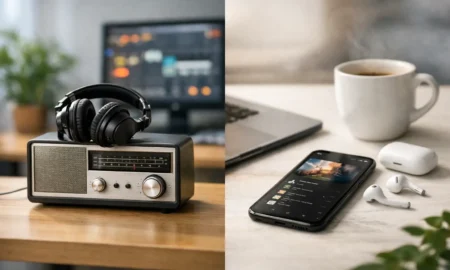
The choice between online radio versus music apps often comes down to one small question: do you want to choose every song, or simply press play and get on with your day? Both can fill a commute, brighten an office or keep the kitchen buzzing while tea is on. But they create very different listening experiences.
For plenty of music lovers, the best soundtrack is not the one with the most buttons. It is the one that lands on a familiar favourite at exactly the right moment, without asking them to make another decision. That is where online radio still has a real place alongside the biggest music apps.
Online radio versus music apps: the key difference
Music apps put the listener in charge. You can search for a particular artist, build playlists for every mood and skip a song in seconds. If you know you want a specific album, a carefully chosen running mix or three hours of 90s dance, that control is hard to beat.
Online radio takes a different route. A station curates the flow for you, mixing familiar songs across eras into a ready-made soundtrack. There is no need to search, sort or worry about what should play next. Tap play, turn up the volume and let the music carry the moment.
Neither option is automatically better. The right one depends on whether music is the main event or the friendly background to everything else. If you are hosting a party with a very particular theme, an app gives you precision. If you are replying to emails, driving home or getting the housework done, a well-programmed online station can feel much easier.
Why fewer choices can make listening more enjoyable
Most of us make enough decisions before lunchtime. What to wear, which route to take, which message needs a reply first. Opening an app and facing an endless catalogue of albums, playlists, genres and recommendations can occasionally feel like one choice too many.
Online radio removes that little bit of effort. It is designed for listeners who want great songs without spending ten minutes building a queue. The best stations do not just throw tracks together either. They create pace and familiarity, moving naturally from a singalong classic to a more recent hit without losing the mood.
That sense of flow matters. A playlist you made six months ago may still contain songs you love, but you already know every turn it will take. Radio can surprise you with a track you have not heard in ages, then follow it with another you forgot you knew every word to. It is discovery, but within a comfort zone.
For a station such as Halo FM, that means a stream built around non-stop hits from the 70s through to today, with more music and less chatter. It is ideal when you want a dependable lift without having to curate it yourself.
The case for music apps
Music apps earn their place for good reason. Their biggest strength is personal choice. You can listen to a new release the minute it arrives, revisit an obscure B-side, follow an artist’s full catalogue or make a playlist that suits one very specific person and occasion.
They also work brilliantly for focused listening. If you are a genuine fan of an artist, an album played in order can tell a story that a mixed station cannot. If you are training for a race, you may want a set of tracks at a particular tempo. If you are planning a wedding, you probably need full control over the dancefloor.
Paid app plans can also offer offline listening, which is useful for flights, patchy signal areas and anyone trying to keep mobile data use down. Many offer high-quality audio options, lyrics and tailored recommendations too.
The trade-off is that personalisation can become repetitive. An algorithm learns what you already enjoy and often gives you more of it. That can be handy, but it may also shrink the musical world around you. A few favourite artists become the same few favourite artists, played on a loop.
There is a cost consideration as well. Free app tiers commonly include adverts and limits, while premium plans add another monthly subscription to the household budget. Online radio can be a straightforward, instant alternative when you want to listen without downloading tracks or committing to a carefully managed library.
Radio brings a shared musical moment
There is something quietly social about hearing the same song as other people. You may be working alone at your desk, but the station’s stream creates the feeling that listeners elsewhere are enjoying the same chorus, remembering the same summer or singing the same slightly questionable lyric.
That connection is especially valuable for background listening. In a café, salon, workshop, office or shop, music needs to keep moving without somebody constantly acting as DJ. A broad, upbeat radio mix gives the room energy while leaving everyone free to do what they came to do.
Radio can also offer a stronger sense of place and personality than an app. Even a music-led station with minimal presenter interruptions has a clear identity: a sound, a selection and a promise about how the day will feel. Listeners know what they are getting when they press play.
Of course, adverts can be part of commercial radio. For some people, that is a reason to choose an ad-free subscription app. For others, a short break is a fair exchange for a free stream, particularly when it helps local and regional businesses speak to an engaged audience. The balance matters. For listeners who prefer music first, low-chatter programming makes all the difference.
Which works best for commuting, work and home?
Your routine can make the answer clearer. During a commute, online radio is wonderfully uncomplicated. Start the stream before setting off and let the music roll, rather than reaching for the phone whenever a playlist loses its spark. Just remember to use it safely and avoid adjusting anything while driving.
At work, radio is often the more practical choice for shared spaces. One person’s perfectly personalised playlist can be another person’s immediate skip. A station playing recognisable hits across several decades gives more people something to enjoy, whether they grew up with disco, Britpop, 80s pop, 00s anthems or current chart favourites.
At home, it depends on the occasion. Cooking dinner, sorting the spare room or having friends round? A continuous station keeps the atmosphere light. Settling down with headphones to explore a new artist? An app gives you room to follow your own taste wherever it leads.
The most realistic answer is that many listeners use both. Radio becomes the easy everyday companion – the soundtrack for life’s in-between moments. Music apps take over when you are in the mood to choose, collect, explore or hear one exact song right now.
How to choose without overthinking it
Think about how you want to feel when you press play. If your ideal listening session starts with browsing, searching and building a queue, a music app will suit you. If you want instant feel-good songs with no admin, online radio is likely to win more of your listening time.
It is also worth considering who else is listening. A personal app library is brilliant when the choice is entirely yours. A broad station mix is often better when music is for a room, a workplace or a car full of people with different favourites.
Above all, do not treat this as a permanent side to pick. Save your playlists for the moments that deserve your full attention. For the rest – the school run, the late-afternoon slump, a busy shift or a quiet Sunday at home – press play on a station that knows how to keep the good songs coming. Sometimes the best musical choice is letting the next great track find you.