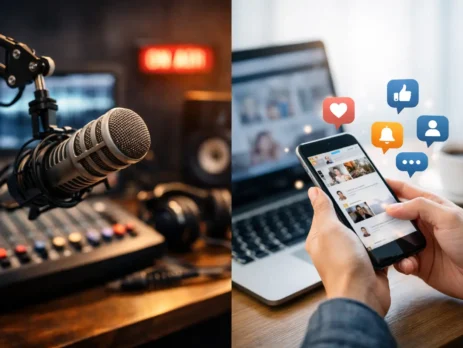
Radio Advertising vs Social Media for Your Brand
A local business can post a clever video at breakfast and watch it disappear beneath a flood of new content by lunchtime. A well-timed radio advert, meanwhile, can keep its place in someone’s mind all the way through the school run, the commute or a busy afternoon at work. That is why radio advertising vs social media is not simply a question of old versus new. It is about choosing the right moment, message and mood for the people you want to reach.
For UK businesses, both channels can earn attention and drive action. They just do it in very different ways. Radio brings familiarity, companionship and broad reach. Social media offers targeting, interaction and fast feedback. The better choice depends on what you need your advertising to achieve, how quickly you need to learn, and whether your message is best heard, seen or shared.
Radio Advertising vs Social Media: The Real Difference
Radio advertising meets people while they are getting on with life. It is there in the car, in the office, at home and during the small everyday moments when a favourite song can lift the mood. That setting matters. A friendly voice, a memorable line and the right music environment can make an advert feel less like an interruption and more like part of the soundtrack.
Social media works differently. It asks people to stop scrolling, watch, react, comment, save or click. This can be brilliant when a product looks great on screen, when a promotion needs an immediate response, or when a brand has something genuinely useful or entertaining to say. Yet it is a competitive space. Every advert sits beside posts from friends, news, creators and other businesses fighting for the same second of attention.
Neither channel guarantees results just because you spend money. Radio needs a clear message that listeners can absorb without seeing a screen. Social needs creative that earns attention before a thumb moves on. The question is not which platform is universally better. It is which one gives your campaign the strongest chance to be noticed and remembered.
Where Radio Advertising Earns Its Place
Radio is especially strong at building awareness. A campaign can reach a wide group of listeners repeatedly, helping a name, offer or jingle become familiar. Repetition is not glamorous, but it is powerful. When people have heard of a business several times, they are more likely to think of it when the need arrives.
Audio also carries personality. A warm delivery can make a local service sound approachable. A playful script can make a seasonal offer feel exciting. Music and sound effects can create a feeling in seconds, from Friday-night energy to calm reassurance. For businesses that rely on trust, such as tradespeople, restaurants, estate agents or community services, that human tone can be a real advantage.
Online radio expands the traditional picture. Listeners tune in at home, at their desks and on the move, often because they want a straightforward stream of familiar hits without endless chatter. A station such as Halo FM offers advertisers the chance to sit alongside a positive, music-led experience built for everyday listening. The right advert can become part of a good moment rather than a distraction from it.
Radio can also make a smaller business sound established. A polished 20 or 30-second advert, heard regularly by the right audience, gives a brand presence that a single social post may struggle to match. This is useful when you are opening a new venue, promoting an event, launching a service area or simply trying to become the name people recognise locally.
Radio’s trade-offs
Radio does not offer the same granular targeting as a social campaign. You may know the audience profile and listening context, but you cannot normally target one person based on a recent website visit or a particular interest. It can also be harder to connect every sale directly to an advert, especially when the action happens days later.
That does not make radio unmeasurable. Use a memorable offer code, a simple web address, a dedicated landing page or a question at the till such as, “How did you hear about us?” Most importantly, look for movement over the length of a campaign: more branded searches, calls, visits and enquiries, not just instant clicks.
When Social Media Takes the Lead
Social media is hard to beat when you need precision. A gym can promote a trial to people within a few miles. A wedding supplier can show its work to recently engaged couples. A retailer can put a timely offer in front of people who have already visited its website. For campaigns with a specific audience and a direct action, that control is valuable.
It is also ideal for visual proof. Before-and-after transformations, menu videos, customer testimonials, product demonstrations and behind-the-scenes clips can make a business feel real quickly. Comments and messages create a two-way conversation, giving people a low-effort way to ask questions before they buy.
The speed is another strength. A post can support a one-day event, respond to a trend or promote a last-minute offer. Campaign data arrives quickly too. You can test two images, headlines or audiences, then move more budget towards the version that brings better results.
Social media’s trade-offs
Fast feedback can encourage short-term thinking. A campaign might generate likes but few customers, or lots of clicks from people who were curious but never likely to buy. Cheap reach is not always valuable reach.
There is also the creative workload. Social channels reward fresh material, and audiences soon tire of seeing the same image or sales message. A business must be ready to produce photos, video, replies and regular updates, or pay someone who can. Without that consistency, even well-targeted advertising can feel flat.
Trust can be trickier too. Social media users are used to being sold to and can spot generic adverts instantly. A polished campaign may still need reviews, useful content and genuine customer interaction behind it before people are ready to take the next step.
Choose Based on the Job, Not the Hype
Start with the outcome you want. If your goal is to put a new name in front of lots of potential customers, radio is likely to deserve serious consideration. If your goal is to sell a limited number of tickets by Friday, retarget online shoppers or collect leads for a very specific service, social media may be the sharper tool.
Think about how people buy from you. A plumber, solicitor or local restaurant often benefits from being memorable before the customer has an urgent need. Radio can build that mental availability over time. A fashion shop with striking new stock may get more immediate value from video-led social adverts that show exactly what is on offer.
Budget and campaign length matter as well. Social media can be started with a modest test budget, although meaningful results still require enough spend to reach and learn from an audience. Radio usually works best when it has enough frequency for listeners to hear the message more than once. A one-off radio spot is rarely a full strategy; a consistent run gives the message room to stick.
The Strongest Answer Is Often Both
Radio and social media can work together beautifully when each has a clear role. Use radio to create familiarity and give people a reason to recognise your name. Then use social media to show the detail, answer questions and encourage a click, booking or visit.
Imagine a local food festival. Radio can bring the atmosphere: dates, location, great music, family fun and a line people remember on the drive home. Social can then carry the programme, food images, ticket information, travel details and reminders as the event approaches. One builds the feeling; the other makes the next step easy.
The same approach works for a retailer, fitness studio, venue or service business. Keep the core message consistent across both channels. If your radio advert promises a welcoming independent café with brilliant brunch, the social feed should show that warmth, food and proof from real customers. Mixed messages waste the benefit of repetition.
Make Your Advertising Easier to Remember
Whichever channel you choose, keep the offer simple. Say who you are, what you do, why it matters and what people should do next. Radio scripts should avoid cramming in every service, postcode and social handle. Social adverts should not depend on tiny text or a confusing call to action.
Give people one memorable hook. It could be a seasonal deal, a distinctive product, a local connection or a problem you solve better than anyone else. The best advertising is not the loudest. It is the message that makes sense at the exact moment a customer needs it.
Great campaigns do not have to choose between the car radio and the phone screen. They meet people in both places with a message worth remembering. Turn up the personality, keep the promise clear, and give your audience a reason to come back for more.