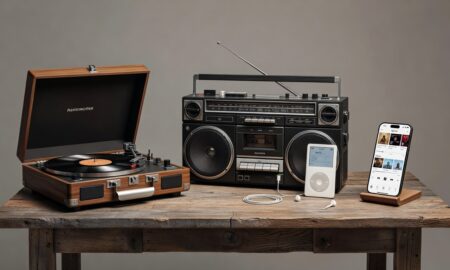
Why Stream Classic and Current Songs?
That moment when a 1980s chorus comes on straight after a brand-new chart hit and both somehow fit your mood perfectly – that is exactly why so many listeners choose to stream classic and current songs instead of sticking to one era. It is not really about picking old over new, or new over old. It is about having the right soundtrack on hand, whether you are starting the morning, getting through emails, driving home or having friends round at the weekend.
For plenty of people, music is less about showing off obscure taste and more about feeling good quickly. A familiar anthem can lift the room in seconds. A newer single can keep things fresh and stop the playlist feeling stuck in the past. Put those together and you get something better than nostalgia alone or trend-chasing alone – a station or stream that feels alive, easy and genuinely enjoyable.
Why stream classic and current songs works so well
The appeal is simple. Classic songs bring instant recognition, while current songs add energy and momentum. When they sit side by side, listening feels broader, warmer and far less repetitive. You are not trapped in a time capsule, but you are not being pushed through a conveyor belt of tracks you barely know either.
That balance matters more than ever for everyday listening. If you are working from home, in the office, out in the car or sorting jobs around the house, you usually want music that keeps the atmosphere up without demanding too much attention. Familiar hits from the 70s, 80s, 90s and 2000s do that brilliantly. Add a smart mix of newer tracks and the sound stays current without losing its comfort.
There is also a social side to it. A mixed-era soundtrack suits more people in more settings. At a family barbecue, in a salon, in a café or on a long drive, one person might light up at a Motown favourite while another waits for a recent pop tune. A stream that moves across decades gives everyone something to enjoy without turning the music into a compromise.
The emotional pull of old favourites and new hits
Music has a habit of attaching itself to life moments. One song takes you back to a school disco, another to your first flat, another to a summer holiday, another to a night out that still gets mentioned years later. Classic tracks carry those memories naturally. They do not need introducing. They arrive with feeling already built in.
Current songs do something different. They mark the present. They become the soundtrack to what is happening now – your routine, your relationships, your weekends, your commute this year rather than ten years ago. That matters because good listening is not only about revisiting memories. It is also about making new ones.
This is where mixed-format streaming really earns its place. It allows listeners to move between comfort and discovery without leaving their lane. Not deep-cut discovery, necessarily. Most people are not after a challenge when they press play. They want songs they know, songs they nearly know, and songs they can imagine hearing again tomorrow. That is a much more realistic listening habit for busy adults than endlessly searching for the next niche obsession.
Streaming across decades suits real life
There is a big difference between music you admire and music you actually live with. A carefully curated album session has its place, but most listening happens in the background of everyday life. You need something easy, upbeat and dependable.
Morning listening often needs a lift without too much intensity. Midday music needs to keep the pace moving. Afternoon listening can drag if the songs are too slow or too samey. Evening listening often works best when it feels fun and familiar. A stream that blends classics and current tracks can move with all of that far better than a narrow playlist built around one mood or one decade.
That flexibility is especially useful for workplaces and shared spaces. If you are running a shop, working in a salon, managing a reception area or simply trying to keep the office atmosphere pleasant, music has to be crowd-friendly. Heavy talk can interrupt the flow. A hyper-specific genre can put people off. A broad hit-based mix tends to be the safer and smarter choice because it creates energy without becoming a distraction.
It is one reason online radio and simple streaming formats continue to appeal. They remove the hassle. No endless scrolling, no debates over what to play next, no need to build the perfect playlist from scratch. You press play and get on with your day.
Stream classic and current songs without the usual faff
Convenience is not a small benefit. It is often the main one. Lots of listeners do not want another app to manage, another login to remember or another decision to make before they can hear a decent tune. They just want instant access to a steady run of songs they already like.
That is where a straightforward music stream stands out. Instead of stopping every few minutes to skip tracks or search for something better, you stay in the moment. The music keeps going. Your mood stays intact. The room keeps its energy.
There is a practical trade-off, of course. If you want total control over every artist and track, a personal playlist gives you that. But total control also means total responsibility. You have to build it, refresh it and rescue it when it goes stale. A good stream removes that burden while still giving you the sense that somebody understands what listeners actually want to hear.
For many adults, that is the sweet spot. Enough variety to keep things interesting, enough familiarity to make it effortless.
What makes a great mixed-era music stream
Not every station or playlist gets the balance right. Some lean so hard on nostalgia that newer songs feel like an afterthought. Others focus so much on current music that the classics feel tokenistic. The best listening experience comes from thoughtful pacing and a clear understanding of mood.
A strong mixed-era stream should feel consistent, even when the decades change. That does not mean every song has to sound identical. It means the overall atmosphere makes sense. A huge power ballad from the 80s can sit comfortably next to a polished modern pop track if both bring a similar lift. A soulful 70s favourite can work beautifully before a 2000s singalong if the tempo and tone feel natural.
This is where music radio still has real value. When it is done well, it saves listeners from doing the curation themselves. A service like Halo FM is built around that idea – more music, less chatter, with familiar hits from across the decades that keep the day moving. For listeners who want easy company rather than constant decision-making, that matters.
Who benefits most when they stream classic and current songs
The honest answer is: almost anyone who wants music to fit around life rather than take it over. Commuters get a soundtrack that makes traffic and train delays a bit more bearable. People working from home get a steady boost without awkward silence. Families get something broad enough to suit different ages. Businesses get upbeat background music that feels welcoming.
It also works especially well for listeners who have outgrown very trend-led music spaces but still want to keep a foot in the present. You might not want wall-to-wall new releases, but you probably do not want to hear the same twelve retro tracks on repeat either. A classic-meets-current format respects both instincts.
That balance can even change day by day. Some days you want pure comfort and singalong favourites. Other days you want a fresher sound with a few surprises. A strong stream can handle both without making you switch formats every hour.
The best soundtrack is the one you keep coming back to
There is something reassuring about music that meets you where you are. Not too niche, not too noisy, not full of interruptions – just a steady run of songs that brighten the room, spark a memory and keep the day feeling lighter. That is why mixed-era listening has such lasting appeal.
When you stream classic and current songs, you are not choosing between past and present. You are giving yourself both. A bit of nostalgia, a bit of now, and a lot less effort getting to the good part. Turn it on, turn it up, and let the right song find you at the right time.